

How to Choose the Best Wood for a Long-Lasting Wooden Pergola in UAE
June 27, 2026
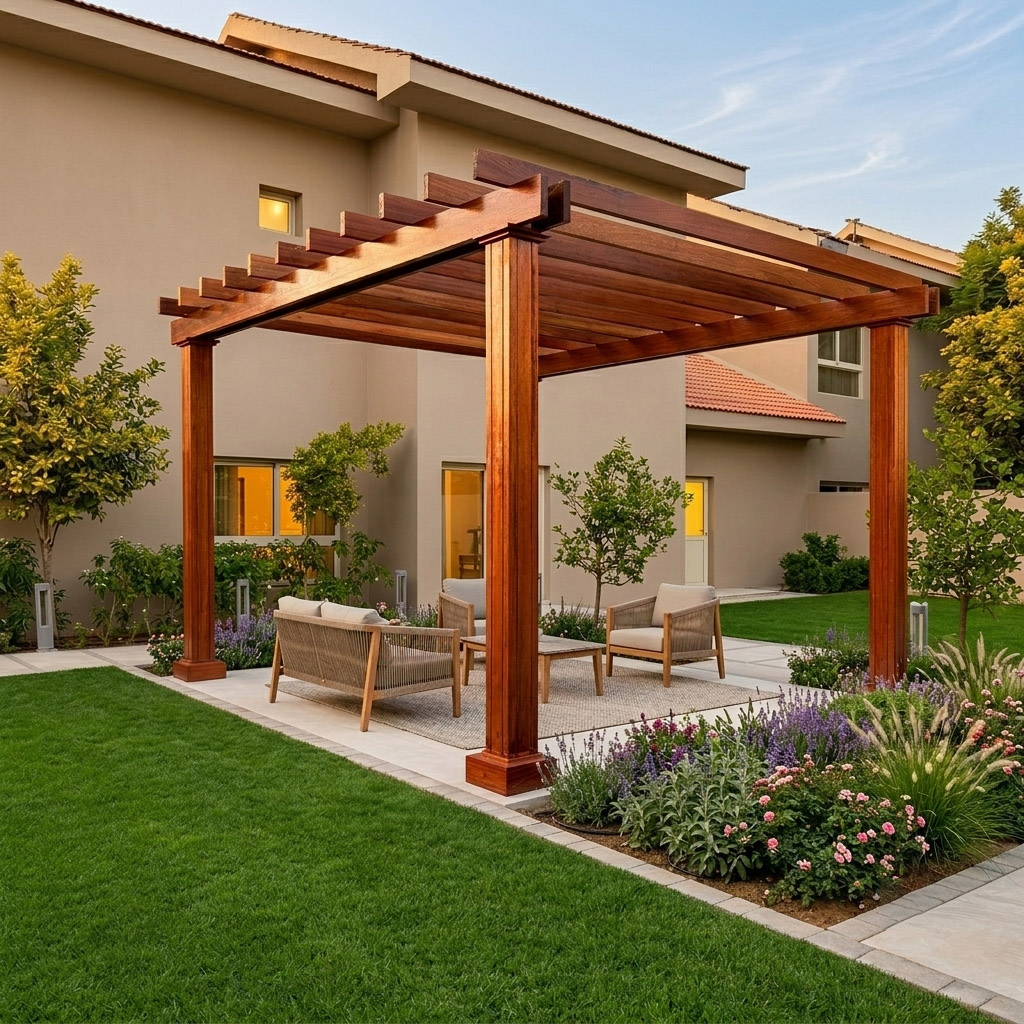
Designing a luxury outdoor living space is one of the most rewarding ways to elevate the architectural value of a premium villa or commercial property. In the Middle East, an outdoor pavilion serves as an alfresco sanctuary—a dedicated zone for family gatherings, weekend barbecues, and poolside relaxation. However, creating a structure that retains its structural integrity and aesthetic elegance year after year requires careful material selection.
The Gulf climate presents a unique set of environmental challenges that standard construction materials cannot withstand. With summer temperatures frequently crossing 45°C, intense ultraviolet (UV) radiation, high coastal humidity, and periodic desert dust storms, the physical demands placed on exterior timber are extraordinary. If the wrong material is selected, a beautiful outdoor structure can quickly warp, split, discolor, or fall victim to wood-boring pests within a single season.
To prevent these costly failures, you must understand the material science behind premium timber selection. Here is an engineering roadmap on how to select the ideal raw materials for creating a premium, long-lasting wooden pergola in UAE.
1. Understanding Thermal Expansion and Moisture Resistance
When wood is exposed to extreme shifts in environmental conditions, it behaves like a living organism. It naturally breathes, absorbing moisture during high-humidity winter nights and contracting rapidly under the intense, dry summer heat. This continuous cycle of expansion and contraction creates immense internal structural stress.
Standard softwoods or non-treated timbers possess high porosity, meaning they absorb and release moisture far too quickly. This rapid moisture transfer inevitably leads to deep checking (cracking along the grain) and twisting, which can compromise the alignment of your overhead rafters.
To ensure stability, professional fabricators prioritize timber species with low volumetric shrinkage coefficients. Selecting high-density hardwoods with naturally tight grain structures minimizes internal movement, ensuring that the interlocking joints and overhead louvres remain perfectly straight and secure regardless of seasonal transitions.
2. Premium Timber Species Evaluated for the Gulf Climate
Not all hardwoods are engineered equally by nature. For high-end architectural execution across Dubai, Abu Dhabi, and the wider region, specialized production houses limit their material palette to a select group of proven, marine-grade timbers:
African Teak (Iroko): Widely regarded as the gold standard for regional outdoor construction. Iroko contains a high concentration of natural oils and resins that act as a built-in defense mechanism against moisture, dry rot, and insect attacks. It offers exceptional stability and matures into a rich, golden-brown hue over time.
Meranti (Dark Red): A highly dense, medium-hardwood that offers an excellent balance between structural strength and acoustic dampening. When properly kiln-dried and treated, Meranti exhibits superb resistance to warping and twisting, making it a favorite for large-span overhead beams.
Ipe (Brazilian Walnut): If ultimate longevity and scratch resistance are required, Ipe is virtually unmatched. It is so dense that it possesses a class-A fire rating (similar to concrete and steel) and does not float in water. It easily resists the abrasive impact of desert sandstorms without showing wear.
3. The Crucial Role of Kiln-Drying and Structural Preservation
The quality of the timber species is only half the battle; how the raw material is processed before fabrication determines its ultimate lifespan on-site. Raw logs contain a significant percentage of natural moisture, known as green timber. Constructing an outdoor framework using un-seasoned wood is a recipe for immediate failure. Vetted manufacturing plants implement strict multi-stage preparation protocols:
Kiln-Drying (Moisture Content Optimization)
Timber must undergo a controlled thermal seasoning process inside specialized kilns. For the arid climate of the UAE, the internal moisture content of the wood must be systematically reduced to a stable threshold of 8% to 12%. This stabilization process pre-shrinks the timber under factory conditions, eliminating the risk of drastic post-installation shifting.
Deep-Penetration Preservative Treatment
Once seasoned and cut to accurate architectural profiles, the timber requires treatment with advanced, weather-resistant wood stains and water sealants. Utilizing micro-porous coatings that protect against harsh UV radiation blocks destructive ultraviolet wavelengths from breaking down the wood’s natural lignin. These specialized coatings prevent the wood from fading into a dull grey color while allowing the internal timber fibers to breathe naturally without blistering or peeling.
Conclusion: Engineering an Architectural Asset for the Future
Building a premium outdoor shading system is a long-term investment in your property’s lifestyle and financial value. While choosing standard, non-treated softwood options might reduce the initial estimation cost, it invariably leads to premature structural degradation, recurring maintenance expenses, and failed visual appeal.
By prioritizing high-density, kiln-dried hardwoods like African Teak or Meranti, and combining them with professional-grade UV preservation coatings, you guarantee that your custom outdoor project remains a stunning, structurally sound, and magnificent centerpiece for decades to come.