

The Ultimate Guide to Mall Fit-Out Approvals for Kiosks in Dubai: Steps & Compliance
June 1, 2026
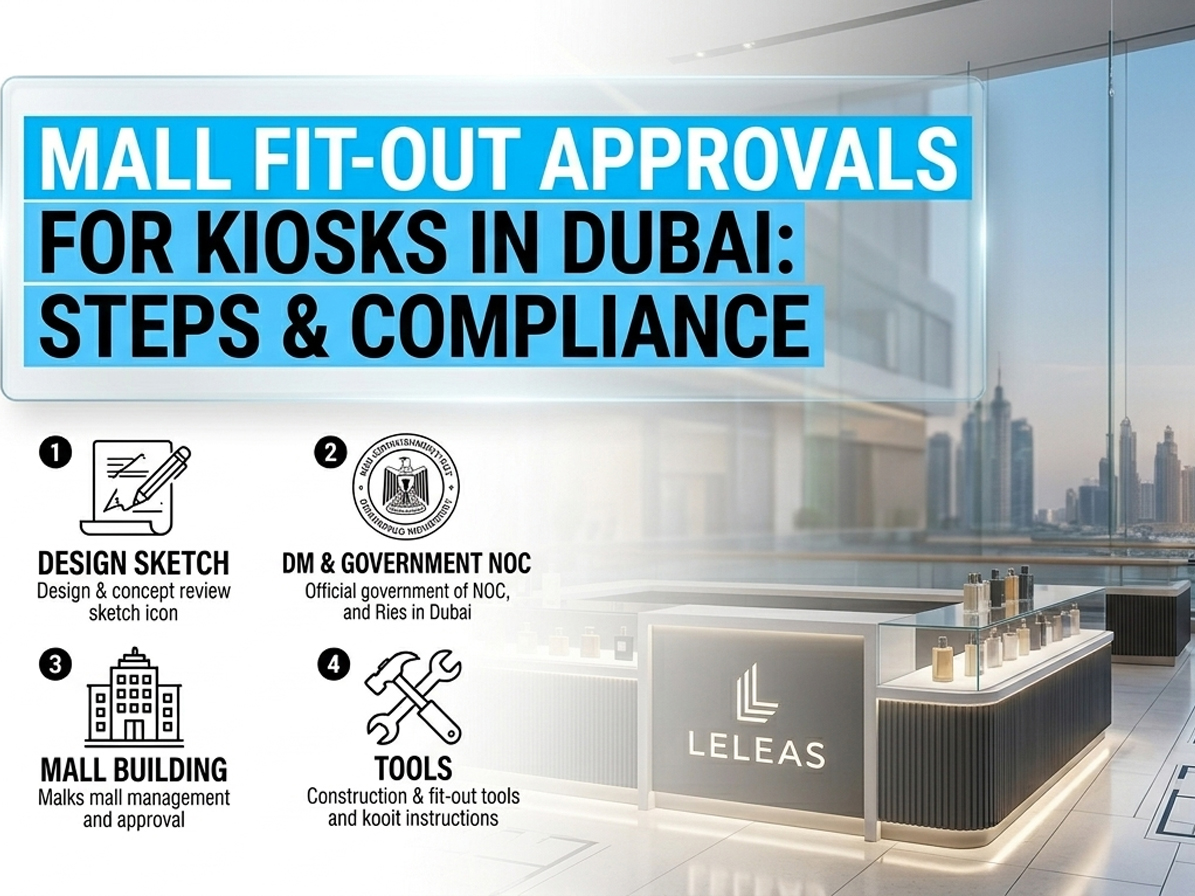
Launching a retail stand, an experiential pop-up, or a luxury display unit inside premium commercial hubs like The Dubai Mall, Mall of the Emirates, or Dubai Marina Mall is a massive milestone for any brand. However, before the first panel is fabricated or the first LED strip is wired, there is a complex regulatory hurdle every business owner must cross: the mall fit-out approval process.
Dubai’s commercial landscape is governed by strict structural, environmental, and fire safety standards. Malls manage thousands of visitors daily, which means your structural footprint must comply 100% with both internal mall guidelines and government regulations. Failing to secure the right permits can result in costly redesigns, heavy fines, or delayed launch timelines.
This step-by-step compliance guide outlines exactly how to navigate the authority approval lifecycle for custom commercial structures and Kiosks in Dubai seamlessly.
Step 1: Securing the Landlord NOC and Mall Technical Guidelines
The approval journey does not begin at a government portal; it starts directly with your landlord or mall management team. Once you secure your retail location and sign the lease agreement or commercial space confirmation, you must request the mall’s specific Fit-Out Technical Guidelines.
Every major developer in the UAE—whether it is Emaar, Nakheel, or Majid Al Futtaim—maintains an independent internal design review committee (DRC). This committee evaluates whether your proposed business concept matches the aesthetic premium quotient of the mall.
At this stage, your fabrication partner must assist you in securing a No Objection Certificate (NOC) from the landlord by submitting a preliminary design concept, conceptual 3D renderings, and precise physical dimensions.
Step 2: Preparing Specialized Engineering Drawings (Architecture & MEP)
Once the preliminary concept is accepted, your contractor must translate the design into highly technical detailed drawings for official submission. Standard sketches or basic interior renders will not pass municipal checks. You require comprehensive schematics prepared in AutoCAD formats that follow specific local authority layering standards.
The submission package must include three critical engineering sets:
-
Architectural & Joinery Layouts: Detailed plan views, elevations, section details, and cross-sections showing exact structural heights, accessibility paths, and material callouts.
-
Mechanical, Electrical, and Plumbing (MEP) Plans: Detailed electrical circuitry routing, total connected power load specifications (measured in kW), cooling load management, and internal wire containment pathways.
-
Material Specification Sheet: A formal document declaring the exact finishes used, with a heavy emphasis on fire-rated certifications for laminates, solid surfaces, or composite panels.
Step 3: Navigating Dubai Municipality (DM) and Free Zone Portals
For retail operations on the Dubai mainland, the primary regulatory body overseeing architectural safety is the Dubai Municipality (DM), accessible via their integrated building permits system (BPS portal).
If your retail space is situated within a specialized economic free zone—such as Dubai Design District (d3), Dubai Internet City (TECOM), or properties under the Dubai Development Authority (DDA)—you must submit your plans to that specific master developer’s portal instead.
The authority reviews the structural calculations to ensure the kiosk frame is completely stable, does not obstruct public walkway tiles, maintains standard emergency egress access, and satisfies regional safety codes. This technical review window usually spans 7 to 15 working days.
Step 4: Securing Dubai Civil Defence (DCD) Fire Safety Approvals
Fire protection compliance is arguably the most stringent phase of the commercial setup process in the UAE. Dubai Civil Defence (DCD) mandates that any temporary or permanent retail installation inside a public building must not pose a fire hazard or block existing fire protection infrastructure.
When designing and assembling your retail unit, you must guarantee compliance with the following DCD criteria:
-
Fire-Rated Materials: Every material, from the internal timber framework to the external high-pressure laminate (HPL) or acrylic solid surface, must possess a certified fire-propagation rating. Your fabricator must provide official laboratory test certificates alongside the application.
-
Sprinkler and Smoke Detector Alignment: If your retail kiosk features a ceiling overhead structure or an enclosed roof canopy, it must not block the mall’s ceiling sprinklers. In many instances, DCD requires the integration of dedicated smoke detectors or localized sprinkler line extensions inside the structure itself.
-
Electrical Load Breakers: The internal DB box (distribution board) must contain certified circuit breakers (MCBs) to prevent overheating and sudden electrical short circuits.
Step 5: Night Work Permits and Final Completion Audits
Once the mall management, Dubai Municipality, and Dubai Civil Defence issue their respective official permits and approvals, physical fabrication can conclude at the factory floor. However, the on-site installation phase introduces its own logistical compliance rules.
Malls strictly prohibit noisy assembly, sanding, or chemical painting during public operational hours. The entire installation must take place as a turnkey deployment exclusively between 12:00 AM and 6:00 AM. To execute this, your contractor must secure Night Work Permits and temporary hoarding clearances from mall security portals prior to bringing components onto the property.
After the modular blocks are bolted together and connected to the main electrical grid, a final joint inspection is conducted by the mall’s engineering division and civil inspectors. Upon verification that the physical structure perfectly matches the stamped approved drawings, you are awarded your official Fit-Out Completion Certificate, clearing the path for your grand commercial opening.
Conclusion: Why Compliance-First Engineering Matters
Securing fit-out approvals in Dubai might appear daunting due to the multi-tiered authority workflow, but it is a structured system designed to maintain world-class retail safety standards. Trying to bypass guidelines or utilizing uncertified materials inevitably leads to costly delays, rejected submissions, or forced operational closures.
Partnering with an experienced design and fabrication team that understands the nuances of the DM BPS portal, DCD protocols, and developer-specific design rules turns a complicated legal process into a smooth, manageable workflow. By designing with compliance in mind from day one, you protect your investment and guarantee a successful, on-time launch in the UAE’s premium retail spaces.