

Key Factors That Determine the Design & Fabrication Cost of a Custom Retail Kiosk in the UAE
May 30, 2026
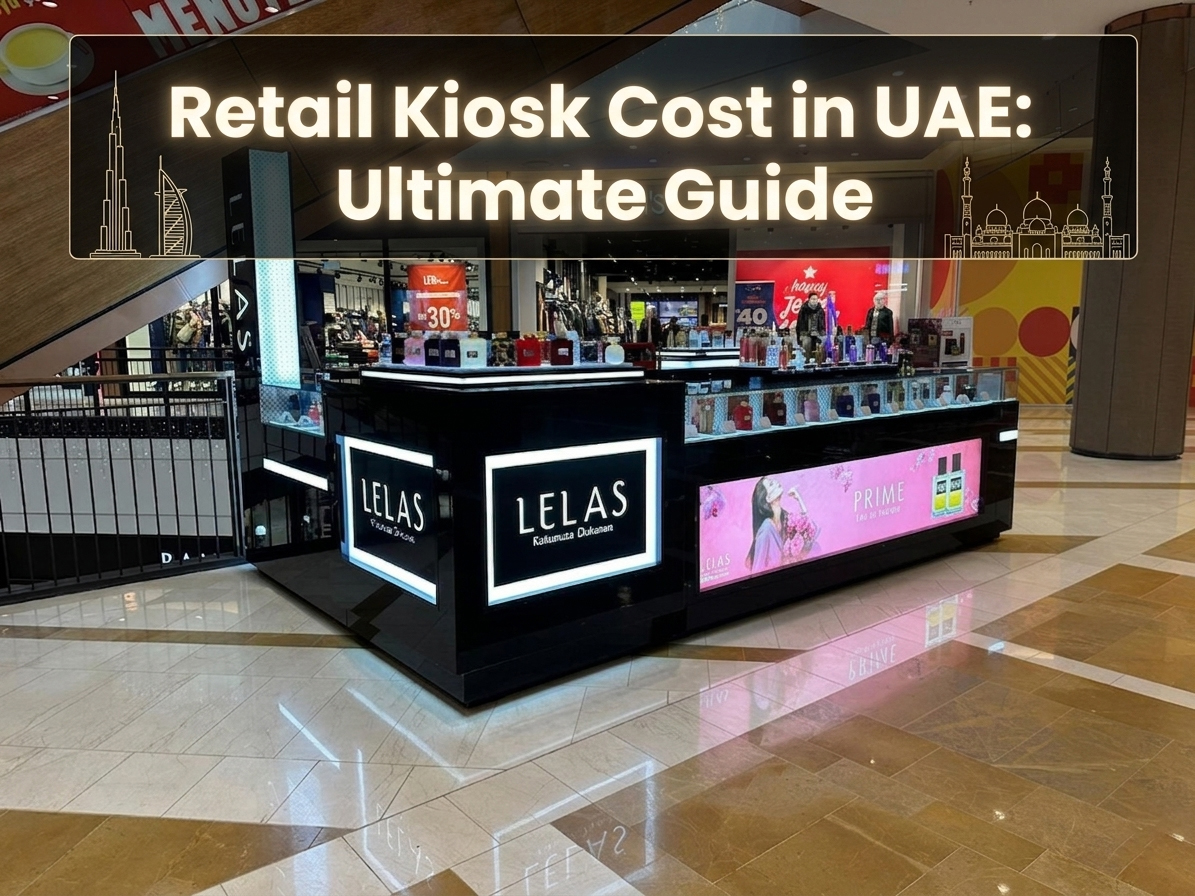
When planning to launch a retail booth, a luxury perfume island, or a gourmet coffee counter inside premium UAE malls, the first and most critical question every brand owner asks is: “How much will the design and fabrication cost?”
In a competitive commercial market like Dubai and Abu Dhabi, there is no one-size-fits-all price tag. A custom retail kiosk is an engineered asset, and its financial estimation depends on several moving parts—from mall approvals to structural raw materials. Understanding these cost drivers not only helps you budget accurately but also ensures you don’t compromise on durability and premium brand identity.
Here is a comprehensive technical breakdown of the key factors that determine the ultimate fabrication cost of a custom retail kiosk in the UAE.
1. Material Selection: Premium Solid Surfaces vs. Standard Laminates
The choice of surface materials is the single biggest factor influencing your fabrication budget. Malls with heavy foot traffic require materials that look luxurious but can withstand daily wear-and-tear without scratching or chipping.
-
High-Pressure Laminates (HPL) vs. Marine MDF: Using standard commercial laminates over high-density, fire-rated MDF is the most cost-effective base solution. It offers a wide variety of textures (wood grain, matte, gloss) and keeps the budget manageable. However, it has visible seams and joins.
-
Seamless Solid Surfaces (Corian): If your brand falls into the luxury segment—like high-end jewelry, cosmetics, or premium tech—switching to seamless solid surfaces like Corian or acrylic polymers will increase the cost. Corian allows fabricators to create organic, curved designs with zero visible joints, giving a premium monolithic look. It is non-porous, stain-resistant, and highly repairable, making it a favorite for upscale mall managements.
-
Metal Accents & Architectural Glass: Integrating electroplated stainless steel, brushed PVD titanium profiles, and heavy-duty switchable smart glass or tempered glass panels adds to the material cost but instantly elevates the premium quotient of the structure.
2. Physical Dimensions, Spatial Footprint, and Structural Complexity
It goes without saying that a larger kiosk requires more raw materials, but structural scale affects the cost in other technical ways as well.
-
Standard Square/Rectangular vs. Curved Organic Shapes: A standard 3m X 3m rectangular island with straight walls is straightforward to cut and assemble on the factory floor, keeping labor costs low. However, if your design involves complex architectural curves, fluid parametric shapes, or multi-tiered overhead canopies, the fabrication requires specialized CNC routing, custom mold-making, and intensive manual joinery finish. This complexity increases both the engineering hours and the final cost.
-
Height Constraints and Overhead Elements: Building a low-profile counter is far less expensive than constructing a kiosk that includes integrated pillars, ceiling structures, or heavy overhead signage bulkheads. Overhead structures require internal structural steel framing (MS or GI framework) to ensure absolute stability and public safety, which adds to both material and structural engineering expenses.
3. Audio-Visual (AV) Integration and Digital Signage Display Systems
Modern retail kiosks are no longer static wooden boxes; they are interactive digital hubs designed to capture consumer attention through dynamic media content.
-
Commercial-Grade Displays vs. Consumer TVs: Integrating high-brightness digital signage, interactive touchscreens, or video walls significantly impacts the budget. True commercial-grade screens are built to operate 24/7 inside brightly lit mall corridors and require professional enclosure integration.
-
Internal Ventilation and Thermal Management: Installing digital screens isn’t just about cutting a hole in the wooden panel. It requires the fabrication team to design hidden internal ventilation channels, cooling fans, and exhaust pathways. Without proper airflow, expensive media players and POS monitors will overheat and fail. Engineering these hidden architectural raceways and thermal systems requires extra technical precision, which influences the technical assembly cost.
4. Smart Lighting Design and Electrical Infrastructure
Lighting is the secret sauce that makes products look irresistible up close. A smart, premium kiosk never relies on cheap, exposed wiring or low-grade fixtures.
-
High-CRI LED Strip Integration: Luxury jewelry showcases and premium beverage kiosks require specialized, high-CRI (Color Rendering Index) LED strip lighting. This ensures that the natural colors of gemstones or gourmet food items are accurately represented without color distortion.
-
Power Distribution and Clean Cable Management: Malls enforce strict limits on total electrical load allowances (measured in kW). Designing a kiosk with a complex power distribution board (DB box), built-in circuit breakers (MCBs), hidden wire pathways, and accessible maintenance panels increases the engineering value. A clean, completely concealed wire architecture costs more to implement but is mandatory to pass strict mall fit-out inspections.
5. Turnkey Logistics: Late-Night Mall Installation and Compliance Expenses
A factor that many brand owners overlook is the cost of delivery, site management, and nighttime installation operational logistics.
-
Prefabrication and Modular Engineering: To comply with strict mall rules, fabricators cannot do noisy cutting, sanding, or painting inside the mall. The entire structure must be completely built, finished, and test-assembled at the factory. It is then carefully modularized (broken down into secure puzzle blocks), packed, and transported.
-
Midnight Site Logistics: Mall installations in the UAE happen exclusively after closing hours, usually between 12:00 AM and 6:00 AM. This requires specialized on-site management teams, nighttime labor shifts, and rapid-assembly techniques. The structural engineering must be smart enough so that the modular blocks can be bolted together seamlessly within a tight window of a few hours. This specialized turnkey deployment naturally forms a part of the professional project cost.
Conclusion: Investing in Strategic Value Over Cheap Execution
When analyzing custom kiosk pricing in the UAE, it is essential to look at the project as a long-term commercial investment. Opting for cheap fabrication might save money upfront, but using low-grade laminates, weak internal frames, or unventilated electronics will lead to costly maintenance downtime and potential rejection by premium mall management teams.
A well-engineered kiosk that combines durable materials like Corian, smart LED integration, structural steel framework, and strict compliance with mall guidelines ensures a seamless launch and a premium brand presence that attracts elite clientele from day one.